
If you’ve ever had a plumber tell you that your main sewer line is clogged and you need a “rooter,” you might have wondered what exactly that means — and whether it’s different from a regular drain cleaning. The short answer: yes, it’s different. And if you’re a Grand Terrace homeowner dealing with a full sewer backup or chronically slow drains throughout the house, rooter service is likely what you need.
Drain Cleaning vs. Rooter Service
Standard drain cleaning addresses clogs in individual fixture drains — a kitchen sink, a shower, a bathtub. The blockage is usually within a few feet of the fixture, and a hand snake or small drain machine handles it.
Rooter service targets the main sewer line — the 3- to 4-inch pipe that runs from your home to the city sewer main. This is the trunk line that every drain in the house connects to. When it clogs, nothing drains properly. Toilets back up. Showers flood. Wastewater has nowhere to go.
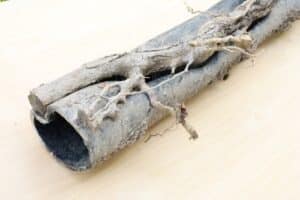
The term “rooter” comes from one of the most common causes of main line blockages: tree roots. Roots enter the sewer pipe through joints, cracks, or connection points and grow inside the line, catching waste and creating dense, progressive blockages. Our post on how tree roots contribute to sewer backups explains this process in detail.
Why Grand Terrace Homes Need Rooter Service More Than Most
Grand Terrace is a tree-heavy community. Mature landscaping planted when the homes were built in the 1970s and 1980s now has root systems that extend 20, 30, even 50 feet from the trunk — easily reaching sewer laterals running beneath front yards and sidewalks.
The sewer pipes themselves are often clay tile, which is the most vulnerable material to root intrusion. Clay pipes are installed in 2- to 4-foot sections joined with mortar. Over decades, ground movement loosens those joints, and tree roots find the moisture escaping through the gaps. Once inside, they thrive — sewer lines provide everything roots need: water, nutrients, and warmth.
What Rooter Service Looks Like
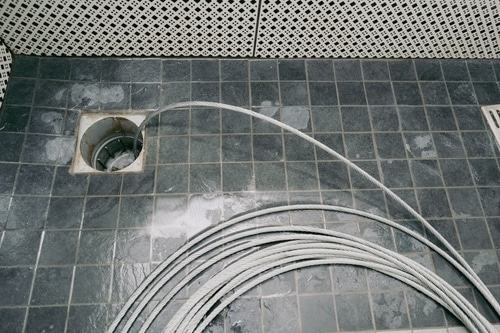
A rooter machine feeds a heavy-duty cable with a cutting head into the sewer line through a cleanout access point. The cutting head spins at high RPM, slicing through root masses, grease blockages, and debris. This restores flow through the pipe immediately.
For more severe root intrusion, hydro jetting follows the rooter to flush cut roots and debris completely out of the line and scour the pipe walls clean. This combination provides the longest-lasting results.
After clearing the line, a sewer camera inspection shows the condition of the pipe. If the camera reveals cracks, joint separation, or pipe collapse beyond what rooter service can manage, sewer line repair or replacement may be needed. We covered the full range of sewer problems and repair options in our post on sewer line problems in Grand Terrace.
How Often Should You Schedule Rooter Service?
If your Grand Terrace home has mature trees near the sewer line and clay pipes, preventive rooter service every 12 to 18 months keeps roots in check before they create a full backup. This is far less expensive and disruptive than waiting for an emergency. Think of it the same way you think about servicing your air conditioner — routine maintenance prevents costly failures.
The California State Water Resources Control Board oversees sewer system standards, and maintaining a functional sewer lateral is the homeowner’s responsibility in Grand Terrace. Proactive maintenance protects your home and prevents sanitary sewer overflows that affect the broader community.
Grand Terrace Rooter Service — Fast and Effective
Plumbing MATTers Rooter & Plumbing Services provides professional rooter service across Grand Terrace and the Inland Empire. Licensed, insured, upfront pricing, and main line clogs cleared fast. Call (909) 714-2207.